There’s nothing quite like the feeling of sinking into a hammock on a breezy afternoon. But for Joe Demin and Rachel Connors, that feeling wasn’t just a weekend luxury—it was the spark for a multi-million-dollar empire with a massive social impact.
When the “Chief Relaxation Officer” and “Chief Enthusiasm Officer” stepped into the tank during Season 11 of Shark Tank, they brought a killer product, a moving origin story, and impressive sales numbers. Let’s break down exactly how they scored a massive deal and where the company is today.
The Mission: More Than Just a Backyard Accessory
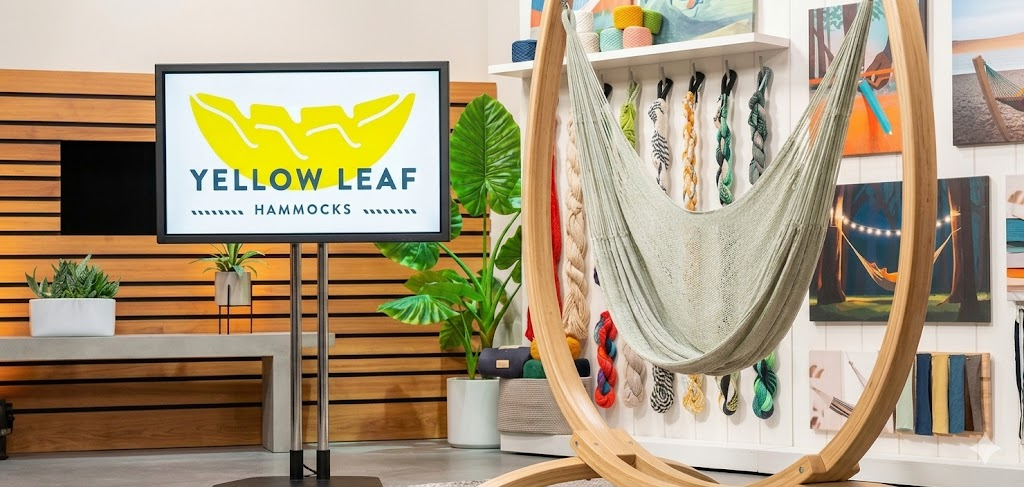
The idea for Yellow Leaf Hammocks started on a backpacking trip through Southeast Asia. While traveling through a remote island in Thailand, Joe stumbled across a ridiculously soft, hand-woven hammock. He quickly learned that these weren’t mass-produced in a factory. They were meticulously crafted by mothers in the Mlabri Tribe as part of an economic program to help pull their community out of poverty.
The problem? The tribe didn’t have a way to reach a broader market.
Joe and Rachel took the plunge, starting a business that would not only bring these insanely comfortable hammocks to the US, but also create high-wage jobs for the weavers. Today, the company employs over 400 weavers in Thailand, transforming the economic landscape for their families while each artisan personally signs the hammock they weave.
The Shark Tank Bidding War
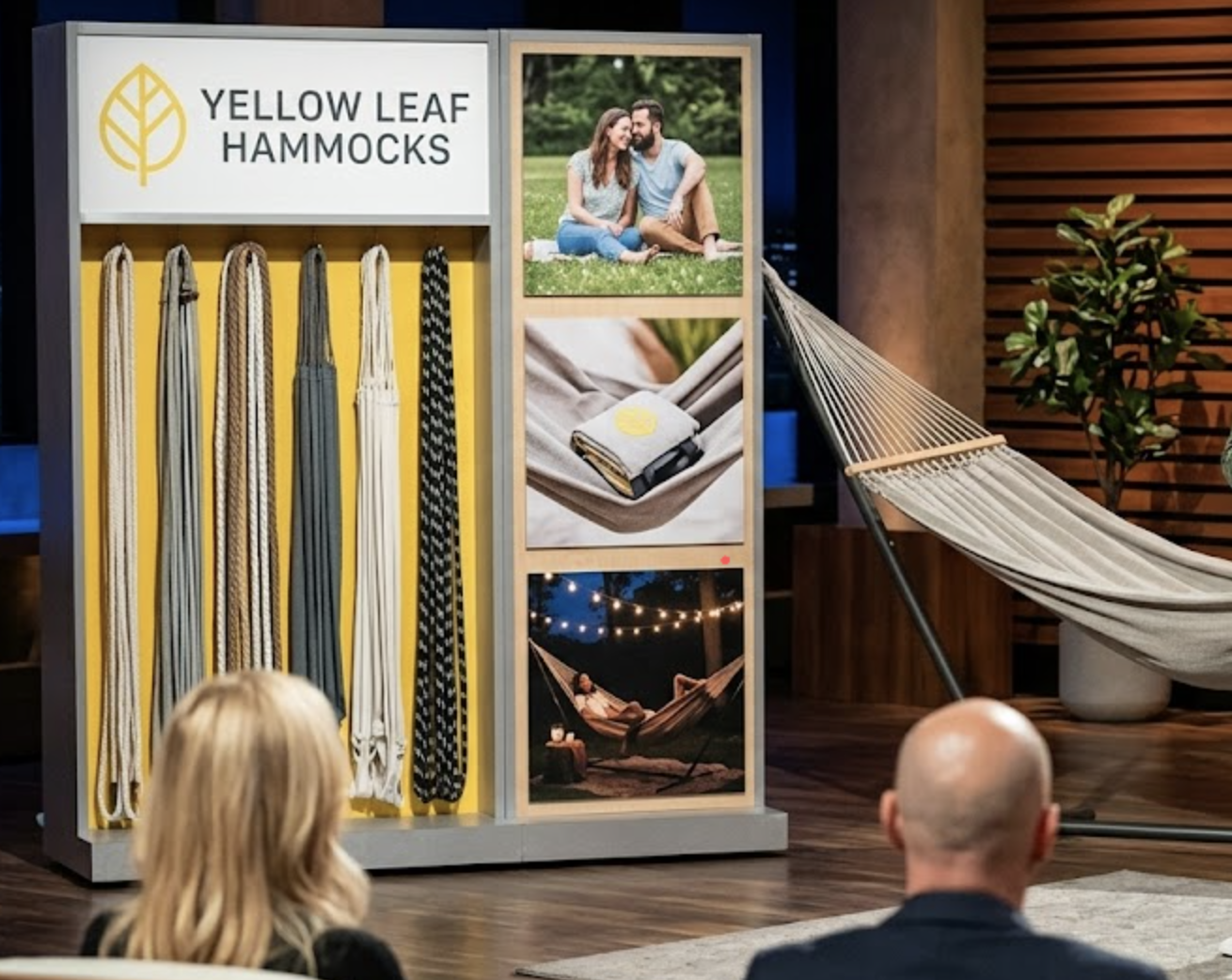
When Joe and Rachel pitched the Sharks in Season 11 (Episode 24), they were already doing great. They came in asking for $400,000 in exchange for 7% equity, boasting over $1.3 million in prior revenue. Their margins were just as comfortable as their product: the hammocks cost $44 landed and retailed for around $199. They had even secured a massive wholesale deal with Virgin Voyages to place a hammock outside every cabin on their cruise ships.
The presentation sparked a massive bidding war among three interested Sharks. Here is exactly how the panel reacted to the pitch and the deals they threw on the table:
The Bidding War Breakdown
- Robert Herjavec: He was the first to jump in, keeping it simple by offering the requested $400,000, but he wanted 15% equity in return.
- Lori Greiner: Lori loved the founders and their mission. She got creative with her offer, proposing $200,000 in cash combined with a $200,000 loan at a 7% interest rate. In exchange, she asked for 17% equity and promised to fund their future purchase orders.
- Daniel Lubetzky: The Guest Shark and founder of KIND Snacks resonated deeply with their commitment to helping women and the environment. He decided to go big, throwing down an initial offer of $1 million for a 33% stake in the company.
Making Shark Tank History
Faced with multiple offers, Joe and Rachel focused their attention on Daniel, attempting to negotiate his massive cash offer. Joe directly asked Daniel if he would be willing to do the $1 million investment for 25% equity instead.
Daniel quickly agreed, stating he was doing it because he loved them and wanted to “change lives” together.
The outcome left the rest of the panel completely stunned. As the deal was finalized, it was pointed out that it was a completely unprecedented moment; never before in the history of Shark Tank had an entrepreneur come in asking for $400,000 and managed to walk out with a staggering $1 million.
The wealthy panel of Sharks smelled blood in the water—in a good way. A serious bidding war kicked off, with three different Sharks throwing cash at the duo.
| Shark | Initial Offer | The Final Outcome |
| Daniel Lubetzky | $1 million for 33% | Accepted: $1 million for 25% |
| Lori Greiner | $400k for 20% | Dropped out after a counter-offer |
| Robert Herjavec | $400k for 15% | Ignored as the founders focused on Daniel |
| Mark Cuban | No offer | Sat back and enjoyed the frenzy |
| Kevin O’Leary | No offer | Bowed out early |
Surviving the Pandemic Pivot
Securing a billionaire investor is a dream, but reality hit hard shortly after their episode aired. The COVID-19 pandemic completely shut down the cruise industry, sinking their massive wholesale deal with Virgin Voyages.
Instead of panicking, Joe and Rachel pivoted their focus entirely to online retail—and the “Shark Tank effect” came to the rescue. The weekend after their episode aired, they pulled in $250,000 in sales. Within four months, that number skyrocketed to $1.5 million. Those direct-to-consumer sales translated to roughly 200,000 hours of paid labor for the artisan weavers in Thailand.
Where Are They Now?
If you’re wondering whether giving up 25% of their company was worth it, the numbers speak for themselves. By 2023, Yellow Leaf Hammocks had soared past $20 million in lifetime sales, boasting an estimated annual revenue of around $6 million. They’ve landed spots on Oprah’s Favorite Things, Good Morning America, and Forbes.
They haven’t just rested on their laurels, either. The product line has expanded significantly to keep the momentum going:
| The Product | What Makes It Special | Recent Updates |
| The Hammock Throne | A luxury $2,200 indoor/outdoor stand | Fully customizable wood and steel colors as of 2024. |
| The Vista | A lightweight, portable stand | Features storage pockets, a carrying case, and sold out four times in 2024. |
| Black Sands Edition | A sleek, dark-toned hammock | Quickly became a top-bestseller upon release. |
| White Lotus Edition | A limited-edition release | Inspired by the upcoming Season 3 of HBO’s The White Lotus (set in Thailand). |
Yellow Leaf also expanded its social mission closer to home in 2024. They began sourcing the sustainable Appalachian maple for their stands from a factory in New York, proving that you can support global artisans and American woodworkers at the same time.
Not every company that survives the tank actually thrives in the real world, but Joe Demin and Rachel Connors proved that you can build a highly profitable business without sacrificing your social compass.